
Vending Machine Startup Costs: What Your First Machine Really Costs All-In (2026)
Starting a vending machine business costs $3,000 to $7,000 all-in. The machine itself runs $2,000 to $5,000, and the rest covers your first inventory fill, a card reader, insurance, and registration, most of which is cheap or free. Here is every line item, including the ones first-timers forget.
That number is worth trusting because it has no surprises hiding behind it. Most articles quote the machine price and stop, then new operators get caught off guard by the fill, the reader, and the insurance. Budget the full list below and your first machine launches without a single "wait, that costs money?" moment. If you just want machine prices by type and condition, that's covered in our vending machine cost guide.
The All-In Startup Budget at a Glance
| One-time startup cost | Typical amount |
|---|---|
| Vending machine, inspected and guaranteed | $2,000 to $5,000 |
| Sales tax on the machine | About $130 to $445, depending on state and county |
| First inventory fill | $150 to $400 |
| Card reader hardware | $200 to $500, plus about $30 one-time activation |
| Business certificate (DBA) | $25 to $120, filed with your county clerk |
| EIN and sales tax Certificate of Authority | Free |
| General liability insurance, first year | $500 to $1,000 |
| Delivery from our warehouse | Free locally Fee applies beyond local zones |
| All-in first launch | $3,000 to $7,000 |
Two things stand out. The machine is the only big line item, and almost half the list is free or under $150. Now let's walk each cost so you know exactly what you're buying.
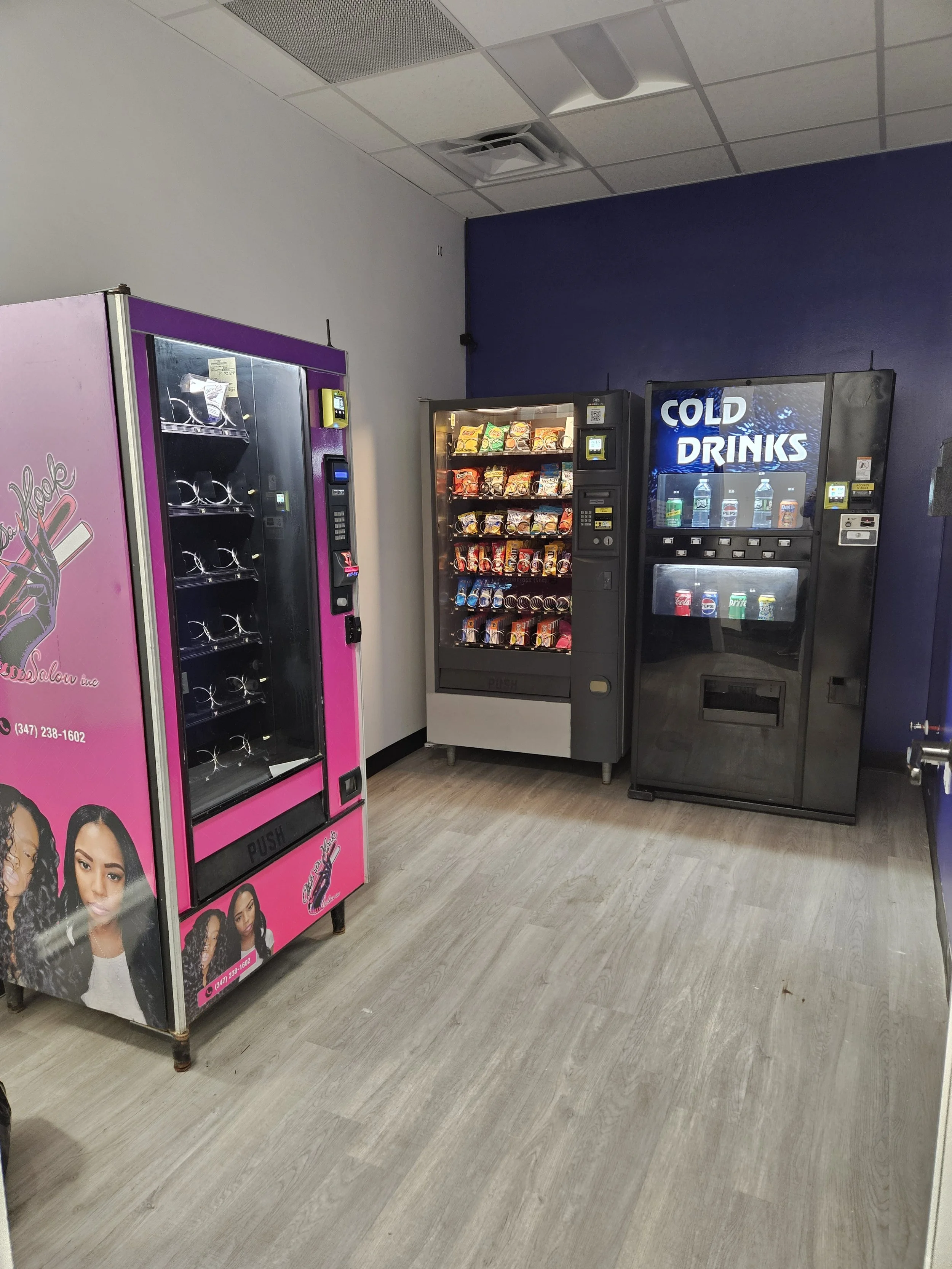
The Machine: $2,000 to $5,000
Type, capacity, and features set the price. A solid refurbished snack or drink machine sits at the lower end, combos in the middle, and glass-front or touchscreen models toward the top. Match the machine to the location: cold drinks for a gym, a combo for an office breakroom, higher capacity for a busy warehouse.
Every machine we deliver is gone through by our team and guaranteed fully functional on arrival, and you're welcome to visit our warehouse to see your machine in person and request adjustments before it ships. That guarantee is the difference between a startup cost and a gamble. Browse our current machines to see what's in stock.
The Five Costs First-Timers Forget
1. The first fill: $150 to $400. A full-size machine holds hundreds of items, and wholesale product for your first stock typically lands in this range. Money-saving move most beginners miss: once you have your free sales tax Certificate of Authority, New York lets you buy inventory for resale without paying sales tax by giving your supplier a Form ST-120 resale certificate. Your product costs drop about 9 percent in New York City from one piece of paper.
2. The card reader: $200 to $500 up front, small fees after. Plan on a one-time activation around $30, a service fee of $8 to $13 a month, and processing fees near 6 percent of card sales. It earns all of that back fast: cashless typically lifts machine revenue 20 to 35 percent, readers commonly pay for themselves within 4 to 8 months, and in New York a machine that accepts all payment types gets the higher $2.00 sales tax exemption on candy and soda. This is the one accessory that is never optional. We handle card reader installation on any machine.
3. Sales tax on the machine itself: about $130 to $445. Equipment you use in your business is taxable at your local rate, 8.875 percent in New York City and a bit less in New Jersey and Connecticut. Small line, but first-timers never see it coming.
4. Insurance: $500 to $1,000 a year. A general liability policy is one phone call, and most locations, especially property managers, want a certificate of insurance before install day. Having it ready when you pitch instantly separates you from every other person who has asked them about a vending machine.
5. Registration: $25 to $120, and the rest is free. A sole proprietor business certificate from your county clerk costs $25 to $120, and both your EIN and your sales tax Certificate of Authority cost nothing. The full walkthrough is in our guide to starting a vending machine business in New York.
What It Costs to Run Each Month
| Monthly cost | Typical amount |
|---|---|
| Restock inventory | $100 to $200, your product cost, recouped at roughly double in sales |
| Card reader service fee | $8 to $13 |
| Card processing fees | Around 6 percent of card sales, roughly $15 to $25 on an average machine |
| Location commission | 5 to 15 percent of sales, about $20 to $55 on an average machine |
| Insurance | $40 to $85, covers your whole route, not each machine |
| Gas for restock runs | $10 to $20 |
| Typical monthly outlay | $195 to $400, mostly inventory you sell back at a markup |
Notice what dominates the monthly column: inventory, which isn't really a cost at all. Every dollar of product you load sells back at roughly double. The true overhead is the small stuff, and your biggest fixed cost, insurance, covers your whole route, so machine two and machine three don't pay it again.
When Does the Machine Pay for Itself?
Industry data from the National Automatic Merchandising Association puts average sales at about $4,416 per machine per year, and after your location commission and card fees, an average machine returns roughly $120 to $150 a month. At that pace a $2,500 machine pays for itself in about a year and a half, and busy locations beat average by a wide margin and get there far sooner.
Then the math tilts in your favor. Your second machine skips the insurance, the registration, and the learning curve, so each machine you add is cheaper to launch and faster to pay back than the one before it. That compounding is why operators who start with one machine rarely stop at one.
What You Don't Need to Buy
No truck, because we deliver. No storefront, no lease, no payroll, no software. No storage unit either; a garage shelf holds backstock for a small route just fine. Vending is one of the rare businesses where the startup list above is genuinely the whole list.
Frequently Asked Questions
How much does a vending machine cost? A quality full-size snack, drink, or combo machine costs $2,000 to $5,000, with condition, capacity, and features setting the price. Refurbished machines from an established dealer offer the best value for a first machine, especially when they arrive inspected and guaranteed fully functional.
How much does it cost to fill a vending machine? Plan on $150 to $400 for the first full stock and $100 to $200 a month in restock inventory after that. In New York, a free resale certificate (Form ST-120) lets you buy that inventory without paying sales tax.
What are the monthly costs of running a vending machine? Beyond restock inventory, expect $8 to $13 for the card reader service fee, roughly 6 percent of card sales in processing, a 5 to 15 percent location commission, and $40 to $85 in insurance that covers your entire route. Total non-inventory overhead on one average machine runs well under $150 a month.
Is $5,000 enough to start a vending machine business? Yes. $5,000 covers a quality refurbished machine, the first inventory fill, a card reader, insurance, and registration, with room to spare. Many first-time operators launch closer to $3,000 with a lower-priced machine.
What is the cheapest way to start a vending machine business? Start as a sole proprietor, buy a refurbished machine from a dealer who guarantees it works, add a card reader, and place it at one strong location. That path launches for around $3,000 and skips nothing that matters; the only thing worth postponing is the LLC, which most operators add once the route grows.
Know Your Number? Let's Find Your Machine
You now have the whole budget, no asterisks. When you're ready, visit our warehouse to see machines in person, and we'll match one to your location and your number. Every machine is guaranteed fully functional on delivery, local delivery is included, and paying is easy. We serve new operators across New York, New Jersey, and Connecticut.
Call (347) 757-7939, 8am to 7pm any day, or send us a message with your budget and your location, and we'll tell you exactly what it buys.
This guide is general information, not legal or tax advice. Confirm current requirements with your state tax department before launching.